Data-Driven Industrial Recycling | Beyond Bins & Trucks
Beyond Bins and Trucks: How Data Is Powering the Next Era of Industrial Recycling
For decades, industrial recycling was viewed as a purely logistical task — place bins, send trucks, collect waste, and dispose of it responsibly. While this approach served its time, today’s industrial landscape demands much more.
In an era of ESG reporting, regulatory audits, cost optimization, and sustainability goals, recycling is no longer just about movement of waste. It’s about movement of data.
Welcome to the next era of industrial recycling — where data drives decisions, compliance, efficiency, and trust.
Recycling Has Evolved — Expectations Have Too
Industries today are under increasing pressure to answer critical questions:
-
- Where exactly did our waste go?
- Was it handled as per GPCB/CPCB norms?
- Can we prove compliance during an audit?
- How much waste are we generating month-on-month?
- Are we recycling efficiently — or just disposing?
Traditional waste handling models struggle to answer these questions. This is where data-powered recycling changes the game.
From Physical Collection to Digital Accountability
Modern industrial recyclers are no longer defined by fleet size alone. They are defined by how well they can capture, manage, and present waste data.
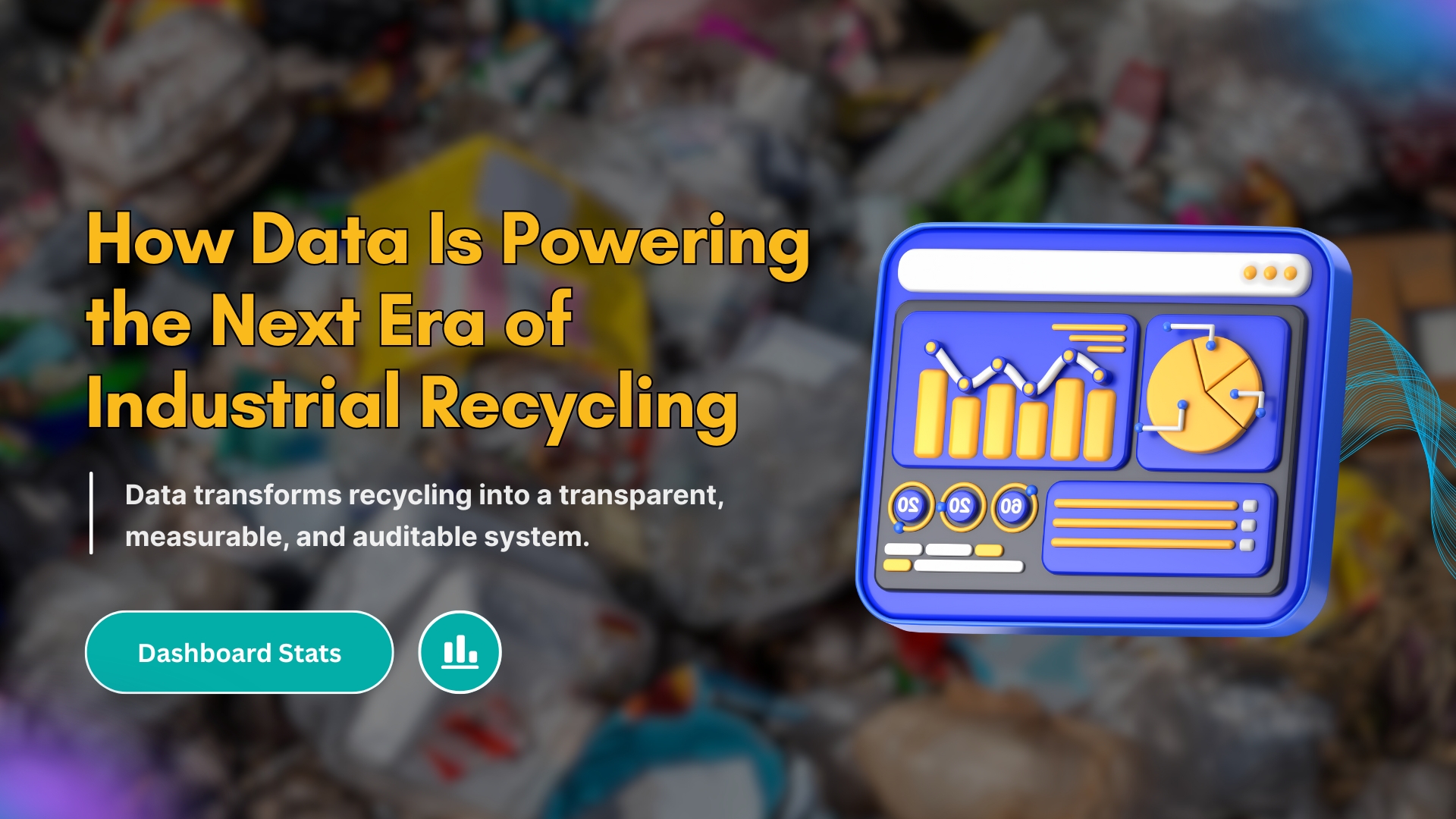
Data transforms recycling into a transparent, measurable, and auditable system.
Key data points now shaping industrial recycling include:
-
- Waste category and quantity
- Pickup dates and frequency
- Movement tracking (especially for hazardous waste)
- Digital collection receipts
- Compliance and disposal documentation
- Environmental impact records
This shift helps industries move from reactive waste handling to proactive waste management.
Why Data Matters More Than Ever in Industrial Recycling
- Compliance Is No Longer Verbal — It’s Verifiable
Regulatory bodies expect documentation, not assumptions. Data-backed recycling ensures every collection is supported by records that stand up to inspections and audits.
- Transparency Builds Trust
Industries want clarity, not ambiguity. When waste movement and processing are documented digitally, trust between recycler and generator increases naturally.
- Smarter Cost Control
Data helps businesses identify:
-
- Excess waste generation
- Irregular pickup patterns
- Opportunities for waste reduction
- Potential recovery value from recyclables
Recycling data turns waste from an expense into a managed operational parameter.
Hazardous Waste: Where Data Is Non-Negotiable
Hazardous waste management leaves zero room for error.
Data-driven systems enable:
-
- Real-time movement tracking
- Traceability from pickup to final disposal
- Accurate manifests and records
- Reduced risk of legal exposure
For industries handling hazardous waste, data isn’t an advantage — it’s a necessity.
Data-Driven Recycling Supports ESG & Sustainability Goals
Environmental responsibility today is measured, not marketed.
Accurate recycling data helps organizations:
-
- Report genuine ESG metrics
- Demonstrate waste diversion from landfills
- Track recycling performance year-on-year
- Align sustainability claims with actual actions
Without data, sustainability efforts remain incomplete.
The Role of Technology in Modern Recycling
Technology bridges the gap between waste handling and data intelligence. Features like below are redefining how industries interact with recyclers.
-
- Digital booking systems
- Centralized waste records
- Automated documentation
- Customer dashboards
- Digital compliance certificates
Recycling is no longer offline paperwork — it’s a connected ecosystem.
What This Means for Industries Today
Industries should no longer ask:
“Who can pick up our waste?”
Instead, the right question is:
“Who can manage our waste responsibly — with proof?”
Choosing a recycler today means choosing:
-
- Accountability over assumptions
- Transparency over convenience
- Data over guesswork
The Future of Industrial Recycling Is Intelligent
The next phase of recycling isn’t about bigger trucks or more bins — it’s about better insights.
Data empowers industries to:
-
- Stay compliant effortlessly
- Reduce environmental risk
- Improve operational efficiency
- Make sustainability measurable
Those who adopt data-driven recycling today are not just managing waste — they are future-proofing their operations.
Final Thoughts
Industrial recycling has moved beyond physical collection. It now sits at the intersection of compliance, technology, and intelligence.
In this new era, data is the most valuable resource recycling creates — for businesses, regulators, and the environment alike.
Because when waste is tracked, documented, and analyzed correctly, recycling stops being a burden — and becomes a strategic advantage.
If you want, I can also provide:
-
- ✅ SEO meta title & description
- ✅ Focus keyphrase & tags
- ✅ Local SEO version (Ahmedabad, Dahej, Savli, etc.)
- ✅ Social media captions from this blog